I've been cooking for my family for over 30 years, and I consider myself pretty careful about what we eat.
Most weekends we shop at the farmers market. I cook from scratch almost every night — real meals with fresh vegetables, good meat from the butcher, and nothing processed if I can help it. I love hosting Sunday dinners for my kids and grandkids, and I’d like to think they eat better than most.
So when our 35th wedding anniversary came around this spring, our kids chipped in and surprised us with something we’d never have booked ourselves: a private Japanese dinner, cooked by a real chef right in our own kitchen.
Chef Hiro arrived with a knife roll that probably cost more than my car payment. But what caught my eye was something else: tucked in next to the knives, he’d brought his own cutting board.
I laughed and told him we owned cutting boards — he really didn’t have to pack one. He smiled politely and kept setting up. Later, while he was prepping, I asked him about it.
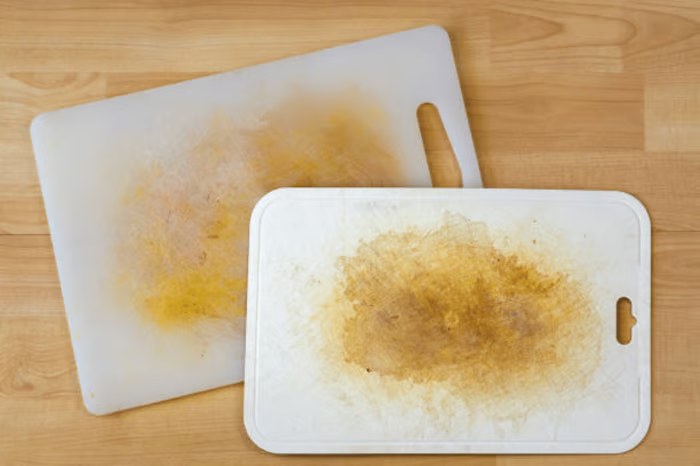
Instead of answering, he picked up my cutting board — the white plastic one I’d been using for about 18 months — and held it up under the kitchen light.
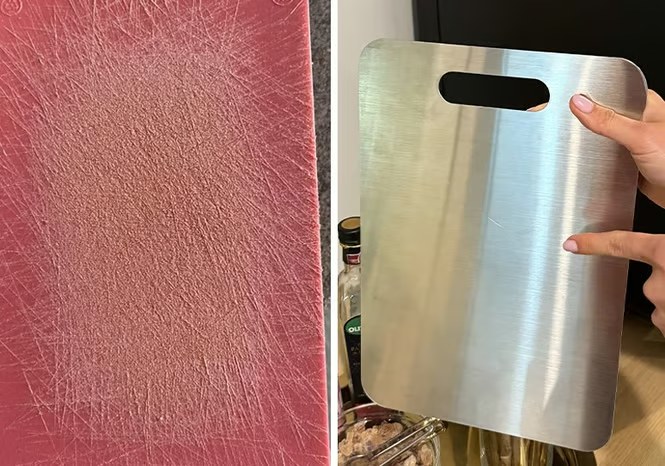
“Do you see all these scratches?” he asked, running his thumb across the deep grooves and knife marks. “That’s plastic your knife shaved off the board. So where do you think it all went?”
I just stared at him.
“It went into the food,” he said, setting it back down. “I stopped cutting on plastic years ago. Most chefs I know back home have too.”
I laughed it off in the moment — I’ve been cooking since before this young man was born. But that night, after everyone had gone home, I couldn’t stop thinking about it — so I got out my iPad and started reading. Within ten minutes I found a university study that literally made my stomach drop.
The average person swallows up to 50 grams of microplastics from their cutting board every year.
That’s roughly the weight of ten credit cards — tiny, invisible plastic particles getting ground straight into your food every time you slice, dice, or chop. And I had been doing exactly that on the same plastic board for years, mindlessly serving it to my family.
I walked back into my kitchen and picked up my board again. I ran my finger across it. Deep grooves, scratches everywhere, faint beet stains that just wouldn’t come out no matter how hard I scrubbed. Every single one of those marks was a spot where plastic had been shaved off by my knife — and ended up in our dinner. Exactly like Chef Hiro said.
I threw it in the trash that same night. And then I spent the next two weeks diving so deep into research that it completely changed the way I look at food safety in the kitchen.
The science every home cook needs to know
The research that shook me so badly was published in Environmental Science & Technology — one of the most respected scientific journals in the world. Researchers at North Dakota State University tested what happens when you chop food on a regular plastic cutting board.
Their findings were jaw-dropping. A single chopping session releases between 1,536 and 7,680 microplastic particles straight into your food. Over a year of regular use, that could mean as many as 79.4 million microplastic particles entering your body — or about 50 grams of pure plastic.
What are microplastics? Microplastics are tiny plastic fragments smaller than 5 millimeters. They form when plastic objects break down through wear and mechanical force — like a knife sliding across a cutting board thousands of times. Once ingested, some can accumulate over time in the gut, blood, and organs.
Then, in 2025, researchers at Nanjing University published an even more alarming follow-up study in Environmental Health Perspectives. They fed mice food prepared on plastic cutting boards for 12 weeks and watched what happened.
The result? The mice showed significant changes in gut bacteria, altered liver function, and signs of intestinal inflammation. The study concluded that no plastic cutting board should be considered completely “safe.”
But here is what really worried me. As we get older, our bodies have a much harder time fighting off everyday toxins. Doctors are now finding that microplastics act as powerful endocrine disruptors. This means they can mess with your hormones, trigger unexplained gut issues, cause chronic joint inflammation, and drain your daily energy. It honestly made me wonder if this invisible plastic was the hidden cause behind so many of those stubborn digestive issues and aches people my age just accept as “getting older.”
As someone who spends an hour a day in the kitchen, this hit me harder than any other health story I’ve read in years. A professional chef had taken one look at my board and known all of it instantly — and I’d had no idea.
Why switching to wood or glass isn't the answer
My first thought was obvious: just grab a heavy wooden board and call it a day.
But then I actually dug into it — and it turns out every common cutting board material comes with serious problems.
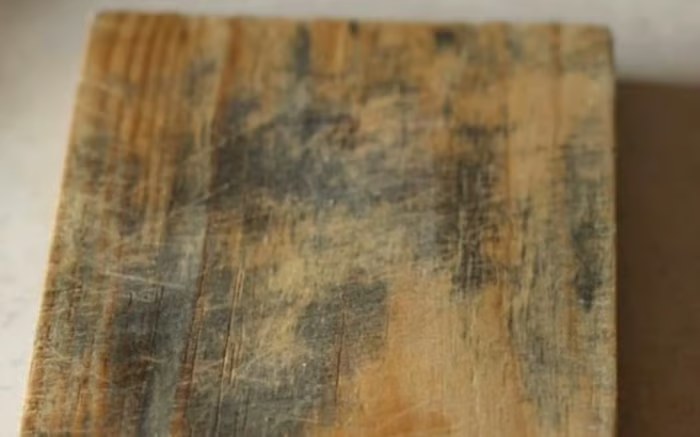
Wooden boards are porous. Bacteria, moisture, and food residue seep into the grain and are nearly impossible to fully sanitize. The knife grooves become breeding grounds for nasty pathogens like salmonella and E. coli. And if you don’t oil them regularly, they warp, crack, and start to mold. Who wants to spend their evening rubbing mineral oil into a heavy block of wood?
Bamboo boards have the same porosity problems, and many are glued together with adhesives that can contain formaldehyde — a known carcinogen.
Glass boards are honestly terrifying. They are slippery, the knife slides dangerously, and the loud clacking sound drives me crazy. Worse, they absolutely destroy your knives. Every cut on glass dulls the blade fast, which means less control, more force, and constant trips to the knife sharpener.
Cutting Board Materials — The Problems
Plastic (PE/PP)Releases up to 50g of microplastic/year
Wood / BambooHarbors bacteria, mold, requires oiling
Glass / CeramicDestroys knife blades fast
Stainless SteelDulls knives, slippery, noisy
I was really stuck. I’d thrown the plastic board out, but there was nothing I felt good about replacing it with. I even drove to the home goods store and stood in the cutting board aisle for 20 minutes, googling every material on my phone.
Then, standing right there in the aisle, I remembered the board Chef Hiro had pulled out of his knife roll. Metal — but too light to be steel, with a soft matte glow to it. I dug up the booking page we’d hired him through and sent him a message, feeling a little ridiculous: “What was that cutting board you brought to our dinner?”
His reply the next morning changed everything.
"It's titanium. I won't cut on anything else."
Titanium. Honestly, it sounded like something for airplanes, not my kitchen counter.
But Hiro explained that titanium is actually one of the most food-safe materials on the planet. It’s used in medical implants because it’s fully biocompatible and non-toxic. It’s certified for food contact. And it has properties that make it absolutely unique in the kitchen — which is why, he told me, so many chefs he trained with in Japan have quietly switched to it.
So I started reading — and the more I learned, the harder it was to believe this wasn’t already mainstream here.
Titanium is completely pore-free. Unlike wood or bamboo, there’s nowhere for bacteria, moisture, or food residue to hide. Run it under the faucet for a second and it’s clean — no scrubbing, no sanitizing, no heavy lifting.
Zero microplastics. It’s a pure metal. There are no plastic particles to release. Your food touches nothing but a clean, inert, food-safe surface.
Gentle on knives. This one surprised me most. Unlike glass, ceramic, or regular steel — all of which murder sharpness — titanium’s surface actually helps keep blades sharper longer.
And titanium dioxide, the oxide layer that naturally forms on the surface, has been extensively studied for its antibacterial properties. Research published in Scientific Reports has shown it’s effective against common foodborne pathogens like E. coli and Staphylococcus aureus.
Honestly, I felt like I’d been living under a rock. This material checks absolutely every box — and until a chef walked into my kitchen carrying one, I’d never heard of anyone using it as a cutting board.
The brand that kept coming up
Finding a titanium cutting board that was actually available here in the U.S., well-made, and not ridiculously expensive took some digging. A lot of what I found was either industrial-grade plates or cheap imports that weren’t real titanium.
But one name kept coming up in the forums, reviews, and Facebook cooking groups I scoured: Vanotium.
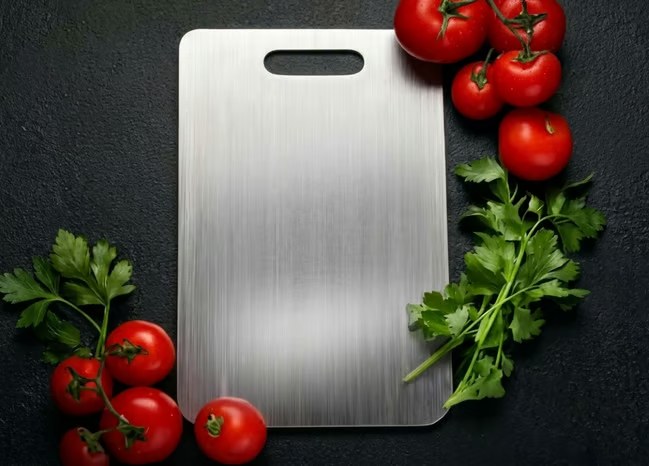
Vanotium makes a cutting board out of 100% pure titanium, designed specifically for home cooks. It has served over 42,390 customers with an average rating of 4.9 stars, and 94% of them say they’d recommend it.
Before ordering, I sent the link to Chef Hiro just to be sure. His reply was three words: “That’s the one.”
No microplastics. No bacteria. No dull knives. No staining. No odors. Plus a 30-day money-back guarantee — so if it didn’t live up to expectations, I could just send it back.
I ordered that same night. Shipping took about a week.
First impressions
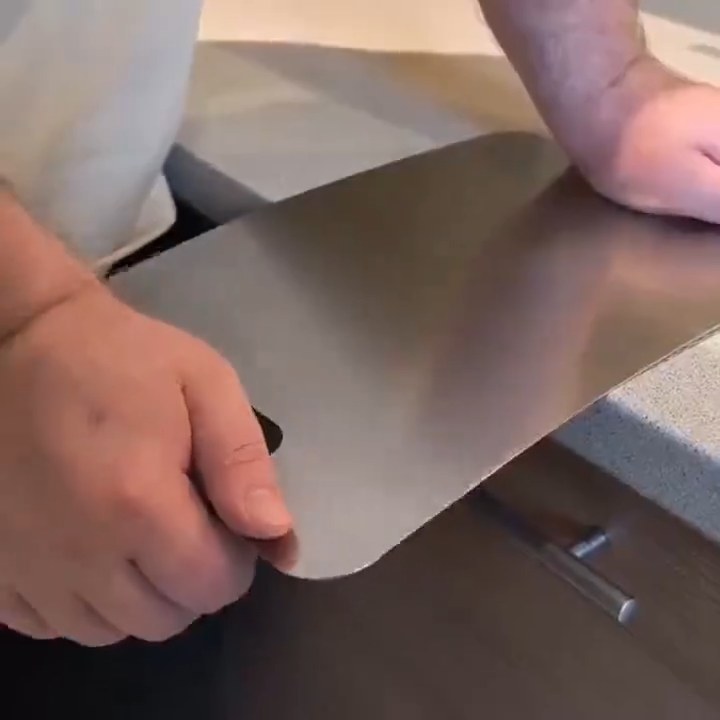
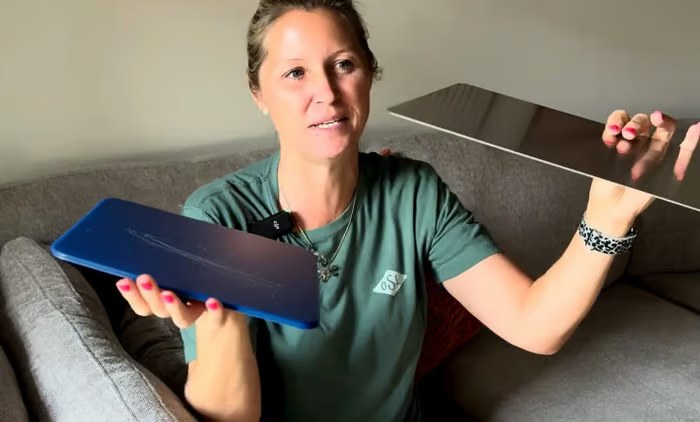
When it arrived, the first thing I noticed was how beautifully light it was. I’d expected something heavy like a steel plate, but it was sleek and easy to maneuver. Thanks to the double-sided design, I can use one side for raw meat and the other for vegetables — no cross-contamination, no juggling multiple boards.
First cook: I made a stir-fry. Chopped peppers, scallions, garlic, ginger. The knife glided beautifully. No sticking like with plastic, no terrifying scraping like with glass. Just clean, satisfying cuts.
And cleanup? I held it under the tap, gave it a quick wipe. Done. No grooves to scrub out. No lingering garlic smell. No turmeric stains. It looked exactly like it did when I pulled it out of the box.
Three months later — the honest verdict
I’ve been using my Vanotium board every single day for three months now. Here’s my report:
My knives are noticeably sharper. I used to sharpen my favorite chef’s knife every few weeks. Since making the switch, I haven’t touched the sharpener once. That alone is worth it.
Absolutely no odors, ever. I cook regularly with garlic, onions, and fish. My old boards held onto those smells for days. Vanotium? Nothing. A quick rinse and it smells completely neutral.
It still looks brand new. Not a single scratch, stain, or sign of wear. After three months of heavy daily use, it’s identical to the day it arrived.
Peace of mind. This is the most important one. I no longer worry about what invisible junk could be contaminating the meals I cook for my grandchildren. I know exactly what their food is touching: pure titanium — an inert, non-toxic metal that doesn’t flake, leach, or break down.
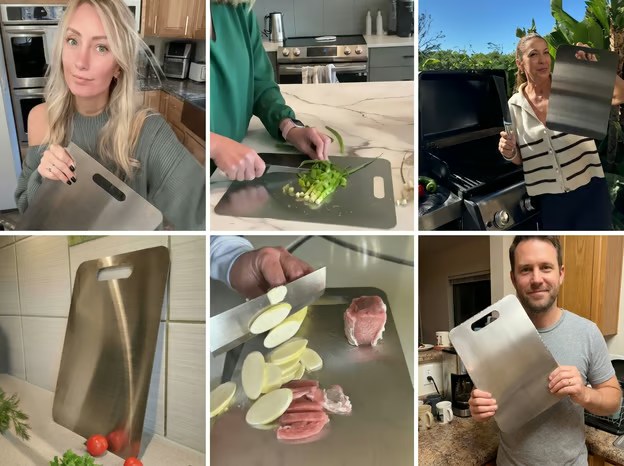
What other buyers are saying